Digital Marketing Specialist, Social Media Consultant,
and Tech Geek at Heart

Home >

Posts tagged as:

blogs

Choice of Form: Two Legal Seminars As Social Media

December 2, 2008

This is a guest post by search engine optimization expert Gab Goldenberg, who actually spends a good chunk of his time in a classroom: he’s a law student!

I’m taking two seminar courses at school this term, and they each resemble a particular form of social media. A seminar is different from a regular course in that it necessarily involves interaction with the students — a seminar is to a regular lecture course as web 2.0 is to web 1.0. What is interesting about these two seminars I’m taking is the difference in the teaching styles and the relationships that result.

Professor Daniel Jutras’ classes begin with him and/or students covering some current events relating to the seminar’s topic. Then, Professor Jutras lectures for about an hour, covering the principal ideas in the week’s readings. We pause for 10 minutes, and when we return, the class asks questions or makes comments, to which Professor Jutras responds.

I see this seminar as a blog. The blogger (Professor Jutras) posts his ideas, occasionally throws in some editorial and takes some light, widget-fed microblogging (the current events some students share). As an aside, Professor Jutras makes it obvious when he’s editorializing, which makes it easy to take it for what it’s worth: an informed opinion, but not necessarily fact.

Read the full article →

Fifteen Years of Online Social Interactions

May 19, 2008

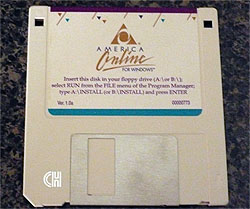
Many tech geeks will often say that their first forays into cyberspace began with a 300 baud modem and a BBS. I’m a little younger than that (finally, I can say that!), but I was an early adopter of social networks from when I first opened my 3.5″ floppy of Promenade (later to be called AOL) and signed up to use the service.

I used Prodigy, but I never was a fan of the randomly generated alphanumeric username and didn’t stick around. On the other hand, my first ever interaction on AOL was with someone who was separated from my social network by only one degree. I was 12 at the time, it was 1993, and AOL cost $5.95/hour (after a flat rate of $9.95 which included 5 hours of online usage).

Read the full article →

How Spying On Your Friends Causes Reevaluation of Endorsed Content

May 1, 2008

Last month, I wrote about the ease of FriendFeed to spy on your friends. In other words, I can check someone’s Friendfeed page and get any information I want about them, including when they are actively engaged in social media activities and how much of a priority social media is to them in their online habits and information consumption.

While users can opt to have private feeds, I strive for transparency and don’t mind if my content is public. I don’t mind keeping the door to my interests open and allowing people to get to know me or to know about the content that interests me.

However, in the past few months, I’ve been running into content that doesn’t necessarily fit in with my interests. Is it misleading to endorse content that someone pitches to you when you don’t necessarily agree with it (or have no interest in it) and then have it publicly available on your feed for all to see? Now that Friendfeed aggregates every social site you use (for the most part — they’re still missing some), anyone can see that you’ve just thumbed up that article on how to find porn behind a WebSense firewall even though you may have done it as a favor to your friend. (Or maybe not.)

Read the full article →

Every Social Network is Different: Here’s What You Need to Know

January 25, 2008

Announcing the NewsOver at the Blog Herald, Chris Garrett says that Twitter is changing his news consumption habits.

How do you get your news? In the past I have variously read newspapers, watched TV news bulletins, read news.bbc.co.uk and obviously more recently sites such as Digg. Now it seems I get most of my news from Twitter.

Twitter: The Upside and the Downside

Three days ago, Heath Ledger passed away. The actor was found dead in his apartment. He was 28. As more and more people discovered the news of the actor’s passing, Twitter was inundated with news links and statements of surprise. If you were using Twitter at that time that his death was announced in media outlets, you knew that Ledger had died. It was impossible to ignore it with the hundreds of Tweets that were filled with emotions over the talented young man’s death.

If you use Twitter regularly, you’d see that it wins as a social news site that provides instantaneous news — at least of that caliber. As Chris Garrett explains in his post, if you follow numerous feed bots, you can get the news all the time. The issue, of course, is engagement. If you’re not actively engaged, the news won’t come at you. It’s like any other news medium. If you’re not watching the television, you’ll find out the news later.

Read the full article →

Blogging: Social Media is Not Only About Social Media Sites

January 23, 2008

Key to the PuzzleOften, I hear from people who complain that social media doesn’t do anything for their “marketing” efforts. Well, for one, social media users — that is, users on social news sites such as Digg, Mixx, Reddit — are not particularly enthusiastic about the proliferation of marketers in their community. This is a huge challenge for someone who wants to sell their product using social media.

But there’s a lot more to media than just these social networking sites. In fact, a highly underappreciated but heavily trafficked method works just as well: the blog.

If you get your product name out among many blogs, eventually, the word gets out. This shouldn’t come as a surprise. In any marketing campaign, the more you see the product, the more likely you are to be influenced by it, even if you don’t want to be. The takeaway: if you talk about something enough, people will listen (even if they don’t want to). Repeated exposure builds recognition.

Read the full article →