Digital Marketing Specialist, Social Media Consultant,
and Tech Geek at Heart

Home >

Posts tagged as:

privacy

Invasive or Indispensable: The Case of Permanent GPS

October 20, 2010

This isn’t a real post about social media strategy, but it’s an important issue that follows from our social media behavior online. I’m sharing this because I think that despite the controversial nature, it is a significant discussion, especially since I suspect that many of you might have thought differently about this topic 5 years ago.

A friend of mine from high school disappeared two months ago. He left behind a wife and two young children. He eventually resurfaced and was said to be in good physical health. I personally do not know the details, but those periods in the interim were really stressful for all parties involved.

A member of my religious community disappeared. He was an older man, a father and grandfather, perhaps a brother too. He had a large family who cared deeply about him. I started writing this shortly after he was reported missing but before his whereabouts were discovered. Eleven days later, he was found dead in his car.

Over 700,000 individuals in the United States alone are reported missing each year. More than 2,300 people a reported missing each day.

Read the full article →

Want to Friend Me on Facebook? Please Use My Public Page or LinkedIn Instead

January 12, 2010

Here’s a truism that Facebook PR is not sure how to readily admit. There really aren’t 350 million members on Facebook. Take my husband’s grandfather as an example. He’s an 89-year-old guy who doesn’t really have his passwords all in the same place, nor does he have an acute sense of hearing to realize that when his grandchildren say “hey grandpa, I’m making a Facebook account for you!” he should respond with “Oh, I already have one.” Consequently, the guy has three Facebook profiles, all of which were created for him by three different members of his family.

Got any family members who boast more than one Facebook profile? You’re likely not alone. Now consider your industry. I have several friends who have both a personal profile and a business profile. These are users who like Facebook but find it rather difficult to merge the personal and professional into one cohesive online identity. I’m sure the internet marketing industry isn’t alone in this regard.

Read the full article →

How Spying On Your Friends Causes Reevaluation of Endorsed Content

May 1, 2008

Last month, I wrote about the ease of FriendFeed to spy on your friends. In other words, I can check someone’s Friendfeed page and get any information I want about them, including when they are actively engaged in social media activities and how much of a priority social media is to them in their online habits and information consumption.

While users can opt to have private feeds, I strive for transparency and don’t mind if my content is public. I don’t mind keeping the door to my interests open and allowing people to get to know me or to know about the content that interests me.

However, in the past few months, I’ve been running into content that doesn’t necessarily fit in with my interests. Is it misleading to endorse content that someone pitches to you when you don’t necessarily agree with it (or have no interest in it) and then have it publicly available on your feed for all to see? Now that Friendfeed aggregates every social site you use (for the most part — they’re still missing some), anyone can see that you’ve just thumbed up that article on how to find porn behind a WebSense firewall even though you may have done it as a favor to your friend. (Or maybe not.)

Read the full article →

Digg: Your Privacy is an Illusion

January 11, 2008

When Digg came out with its new social features, some folks applauded the move while others despised it. Nearly four months later, the social features appear to be here to stay.

But are they secure?

As Digg becomes more of a social network and less of a social news network (or a hybrid that incorporates both elements), it has a lot of obstacles it needs to face. Besides major usability issues, duplicate stories submissions, and ads that literally scream at you, Digg has yet another issue to deal with: privacy.

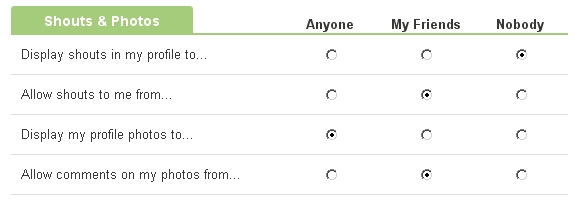
Ben pinged me earlier today with a very interesting observation. It turns out that your shouts are not private after all, even if you keep them absolutely hidden. Your friends can see them. Actually, anyone can see them, even if they’re not logged in.

Allow me to illustrate. My current Digg settings prohibit anyone from seeing my Digg shouts.

Digg Shout Preferences

My shouts are blocked for everyone to see, and to ensure this, I’ve saved this selection multiple times.

When I go to my profile, Digg makes a clear assertion that I want my shouts kept private. But look at that red arrow.

Digg Shout Preferences

Read the full article →

Should Domain Name Registration Information Be Hidden?

March 22, 2007

Since I’m covering a lot more of the latest news lately, I noticed yesterday that there is proposed legislation that will possibly anonymize domain registration information. The reason? Spam. Spammers are apparently accessing WHOIS information and using this information to send individuals unsolicited messages. The proposed legislation would allow “domain name registrants would be able to list third-party contact information in place of their own.”

Note that I emphasized “apparently.” While I’ve seen this practice happen in the past in minute amounts, I’m pretty confident that spammers are not using the WHOIS database for the kind of spam that plagues our everyday lives. Spammers have bots that crawl regular SERPs for that. Furthermore, most WHOIS query databases have limitations on the number of domains you can look up in any given time.

Additionally, once your email address is out there, it’s out there. Perhaps, if you choose to hide it later, it won’t be accessed by new generation spammers (unless they buy an old list), but people will have those email addresses until you change to a new one (and protect that new one). The only spam I’ve received related to any domain names I’ve owned are from domain “hijacker” companies, like DROA (the Domain Registry of America), companies who think it’s perfectly fine to con users into believing that their domain is about to expire — so let’s go renew it with another registrar — me! (Do I sound frustrated?)

Read the full article →