Digital Marketing Specialist, Social Media Consultant,
and Tech Geek at Heart

Home >

Posts tagged as:

sphinn

Best Internet Marketing Posts of 2008

January 5, 2009

Best Internet Marketing Posts of 2008

Today is my birthday, and I decided to give you all a gift that few of you have been highly anticipating for a few months now. My most popular post on this site — probably by far — was last year’s Best Internet Marketing Posts of 2007 compilation. I spent about 3 days (and nights) on it (without sleep) and I was quite happy with the turnout. This year, I began starting to write this compilation in the first week of December. The collection begins with posts that start in January of 2008 and have been collected and shared in the last 12 months. Like last year, I’ve grouped them into different categories and written short descriptions on each post. There’s no order to the posts; I’ve used my bookmarks and a variety of social sites and peer recommendations to create this list. I hope this year’s list surpasses last year’s. Let me know how I did in the comments. ;)

Here’s how this works: In the Internet Marketing Best Posts “series,” I take posts that are typically timeless — they’re not confined to a specific event or news occurrence — they’re valuable for the long haul in terms of Internet Marketing and creative strategy. Hopefully, you’ll see that these posts are still relevant in a few years down the road.

Read the full article →

The Great Social Media Traffic Debate: Niche or General Networks?

August 27, 2008

While I prepare to relocate (I’m moving next week!), I was fortunate to have the help of James Duthie, a serial guest blogger from Online Marketing Banter, a blog on social media, marketing, and more.? You can subscribe to more of his ramblings here.

A few weeks ago I wrote a post over at SEO Scoop comparing the quality of search engine traffic against social media traffic. The aim of my little experiment was to test the assumption that search traffic was of a higher quality than social media traffic. And as most would have guessed, the mighty engines prevailed as the superior source of traffic. Many people found the research interesting, but a number of people commented that the social networks probably shouldn’t be grouped together. Some are built for the masses whereas others have tightly defined niche audiences. So the question arose – was social media traffic misrepresented by grouping traffic from all networks together? Is traffic from highly targeted niche networks better than traffic from generic networks? (Hat tip to Gab for posing that question to me.) Let’s find out.

Read the full article →

How FriendFeed Can Teach You About Your Friends

April 10, 2008

FriendFeed Logo

FriendFeed has been out for just a few months and has already established itself as a solid startup with an indefinite amount of potential. Founded by four ex-Googlers, FriendFeed allows you to subscribe to your friends’ updates across 35 social networks and to stay up to date with the content they’re discovering and sharing across the web.

Currently, FriendFeed supports the following social networks and tools:

FriendFeed Services

FriendFeed aggregates social news sites (Digg, Google Reader Shared Items, Mixx, and Reddit), social bookmarking sites (del.icio.us, Furl, Google Shared stuff, Ma.gnolia, and StumbleUpon), status updates (Gmail/Google Talk, Jaiku, Pownce, and Twitter), video (Seesmic, Vimeo, and YouTube), photos (from Flickr, Picasa, SmugMug, and Zoomr), music (from iLike, Last.fm, and Pandora), books (GoodReads and LibraryThing), other miscellaneous web services (Amazon Wishlists, Disqus, LinkedIn, your Netflix Queue, Netvibes, SlideShare, Upcoming events, and Yelp), and finally, your own blog or Tumblr. For your blog, any URL will do, and if you are writing for a blog with multiple authors, FriendFeed parses through the authors and only features blog posts written by you.

FriendFeed: The Service and What it Offers

Read the full article →

How Do You Network on Different Social Sites?

December 19, 2007

How do you leverage different social networks? I am fascinated by the amount of social networks that I’m part of, but better yet, I’m intrigued to find that I assume different “personas,” at least in terms of choosing friends (and using the networks), on each social site. Are you the same?

Allow me to explain:

I first embraced social networking in the late 90s when I joined SixDegrees.com. I was pretty liberal when choosing my friends, but the social networking phenomenon didn’t take off and SixDegrees died. They had a great idea, though, and it finally became popular in the last few years.

First (Real) Stop: Friendster

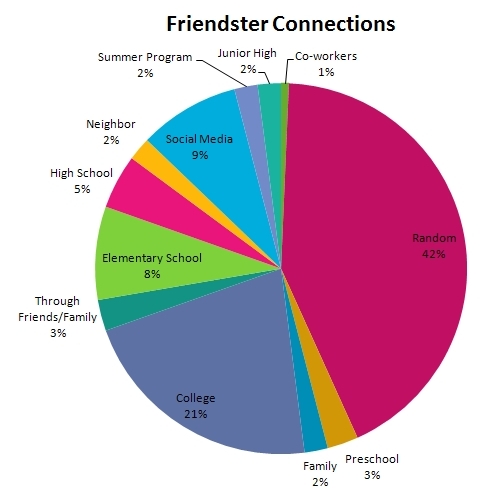
In 2001, I took the plunge into Friendster, and as an early adopter, I befriended just about anyone I had some sort of association with and reciprocated every friend request. I have 148 total friends on Friendster at this time, and as you can tell from the chart below, a lot of them are “random” in the sense that I don’t have a clue who they really are.

Tamar Weinberg's Friendster Connections Breakdown

Read the full article →

You Can’t Own the Community Without Understanding Them

November 2, 2007

Clueless WomanFor some people, the lessons of SMX Social Media did not resonate. There really is one takeaway that doesn’t seem to be widely understood:

Understand the community. Know who you’re pitching to. Know what you’re getting into.

There’s a clear misconception that because you can contact all your friends and have them game the social news networking sites, you can submit content that doesn’t suit the community at all, instead focusing on self-promotional content that deviates from every rule in the book.

I don’t consider myself a rockstar. I do, however, feel that I have a better understanding of the community to which I submit stories because I am not only submitting stories: I am actively engaging in the community. I am commenting. I am studying what’s been successful and what hasn’t been. It’s a completely different mindset than I had when I started using these social networks — simply because I had not given the networks and the users within a chance.

Read the full article →